AI Use CasesPhotorealistic AI Lamps Generation
Photorealistic AI Lamps Generation
AI-Driven Photorealism: Custom SDXL Turbo Pipeline for High-End Interior Design.
Business Automation
Interior Design


Summary
Client & Objective
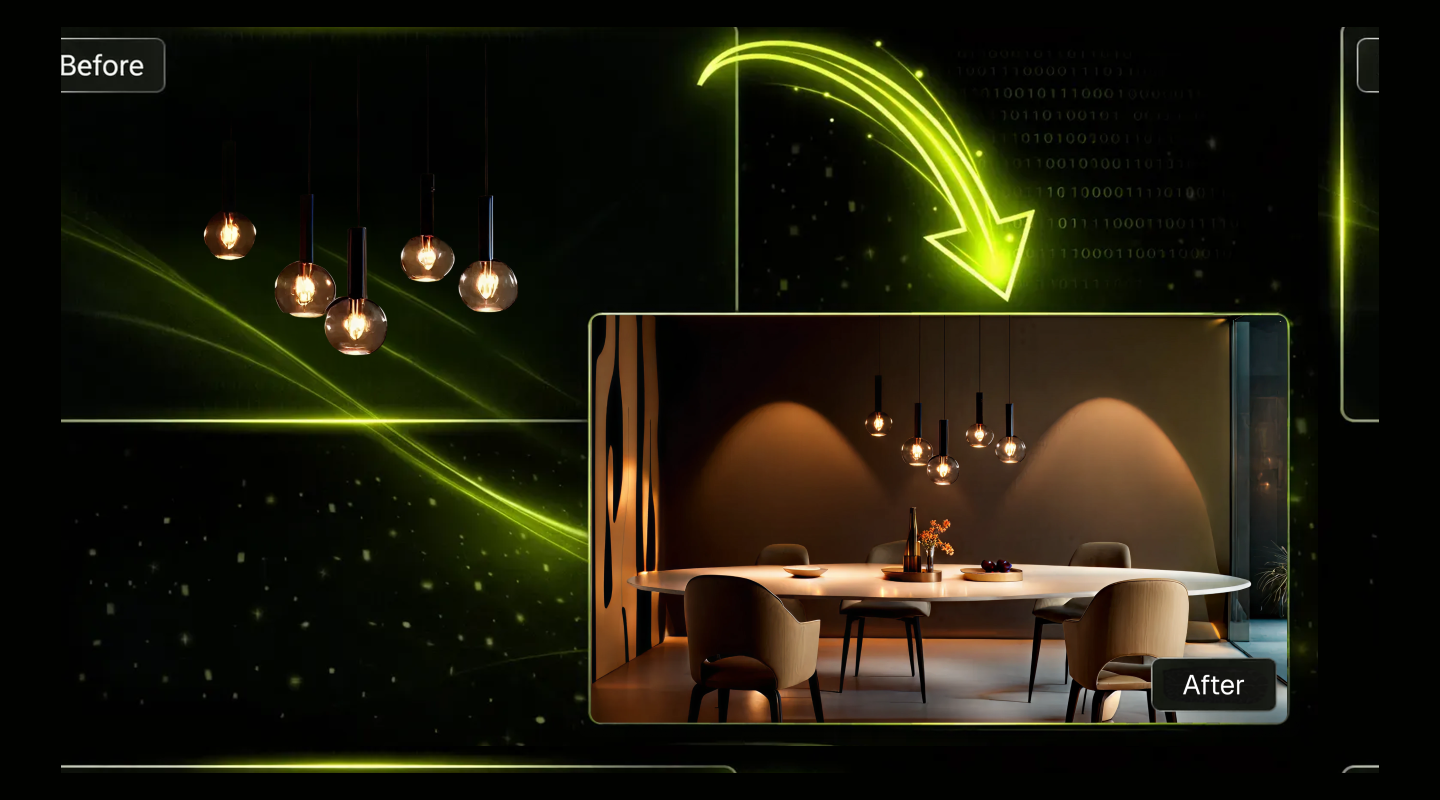
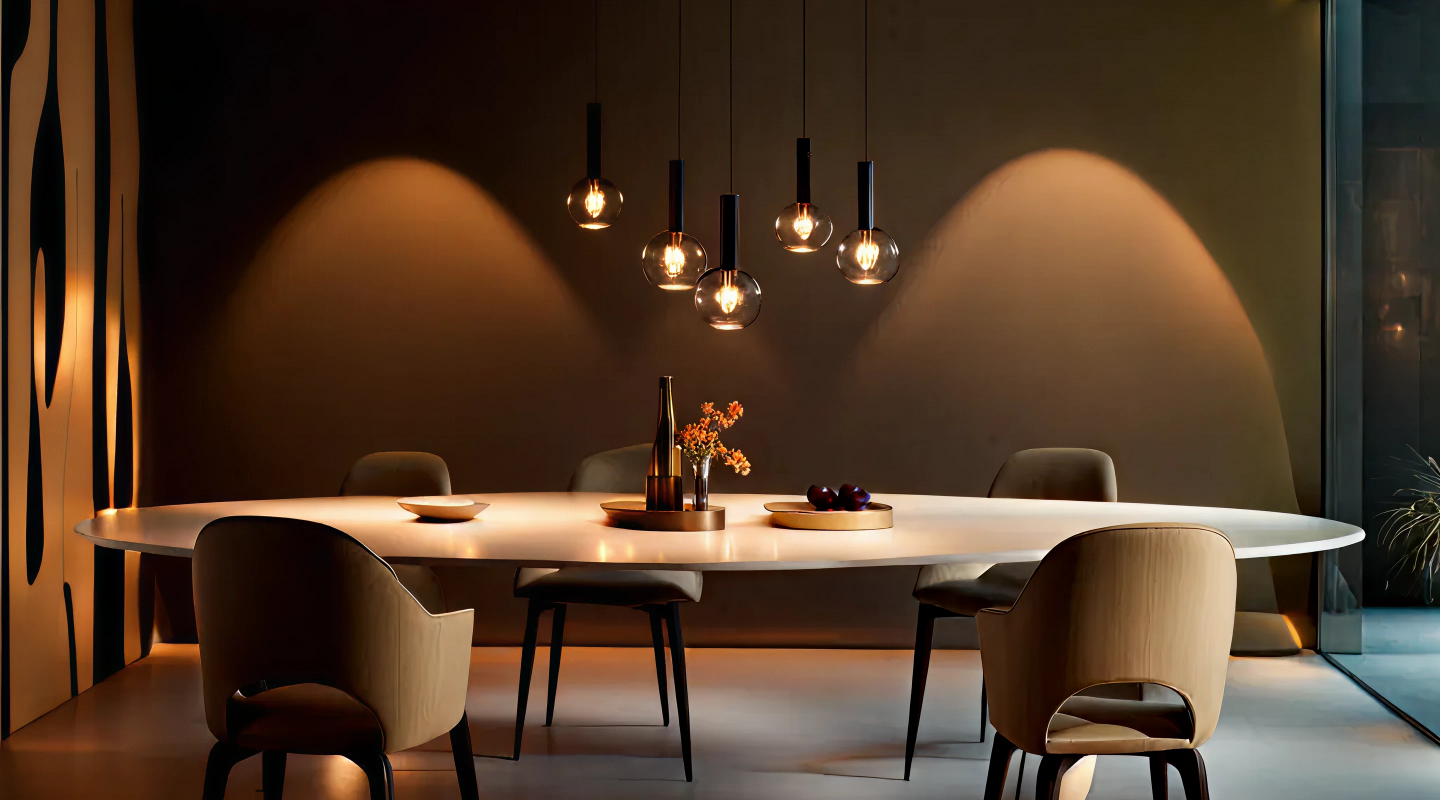
The client is a technology-driven interior design company specializing in creating immersive and visually compelling design experiences. They combine AI-based visualization, 3D modeling, and generative design tools to help clients preview and refine interior concepts before implementation. Their goal was to develop a photorealistic product catalog for their extensive lighting collections - not just isolated product renders, but context-aware visualizations where each lamp would appear naturally integrated into diverse interior environments. The generated images needed to reflect accurate material textures, lighting behavior, and stylistic harmony with different room aesthetics to support both marketing visuals and client presentations.
Input Constraints & Environmental Synthesis
They only had a few - sometimes just one - reference images per lamp, which made it difficult to create realistic visualizations. The task required generating not only accurate images of each lamp but also full interior scenes featuring the product naturally integrated.
High-Speed Inference
The team fine-tuned Stable Diffusion XL Turbo using CLIP for automatic caption generation and employed the Refiner module to enhance edge definition and realism. A REST API was deployed on a Tesla T4 GPU, achieving generation times of about 10 seconds per image batch, ensuring a balance between performance and cost.
Tech Challenge
Achieving Material Realism and Structural Accuracy
The key difficulty was meeting the client's demand for true photorealism. The generated lamps had to match their real-world textures, materials, and proportions, as well as appear convincingly in different interior contexts.
Balancing Hyperparameters for Consistency
Fine-tuning diffusion models proved highly sensitive — even small changes in learning rate, guidance scale, or negative prompts could dramatically affect realism and consistency.
Pushing the Limits of SDXL Architecture
Maintaining stable training dynamics across limited data was crucial. At the time, advanced solutions like Nano Banana or extended GPT-assisted diffusion pipelines were unavailable. The team had to push the boundaries of existing Stable Diffusion architectures, carefully balancing model complexity with GPU constraints.
Development Technologies Stack




Timeline
1 weekSolution Architecture Design
1 weekData Collection & Preprocessing
5 weeksStable Diffusion Model Fine-tuning
1 weekAWS Endpoint Creation
2 weeksDeployment & Testing
Solution
Solution 1Training Methodology: LoRA Adapters & Automated Labeling
The team fine-tuned Stable Diffusion XL using LoRA adapters on the client's dataset, where each lamp corresponded to a unique brand category. CLIP was used to automatically label and organize training images. Training ran for 10 epochs and completed within 4 hours.
Solution nullPost-Processing & Inference Optimization
After training, optimal inference parameters were selected — including guidance scale tuning and negative prompt balancing. The Refiner module was applied for post-processing to improve contour accuracy and overall image clarity.